The gaming and esports industry continues to evolve at a rapid pace, driven by technological innovation, shifting player expectations, and growing global audiences. By 2026, gaming is no longer just entertainment-it is a cultural, competitive, and economic force shaping digital experiences worldwide. Esports, in particular, has matured into a mainstream industry with professional leagues, global tournaments, and massive online viewership.
This article explores the top trends in gaming and esports in 2026 and how they are redefining how games are played, watched, and monetized.
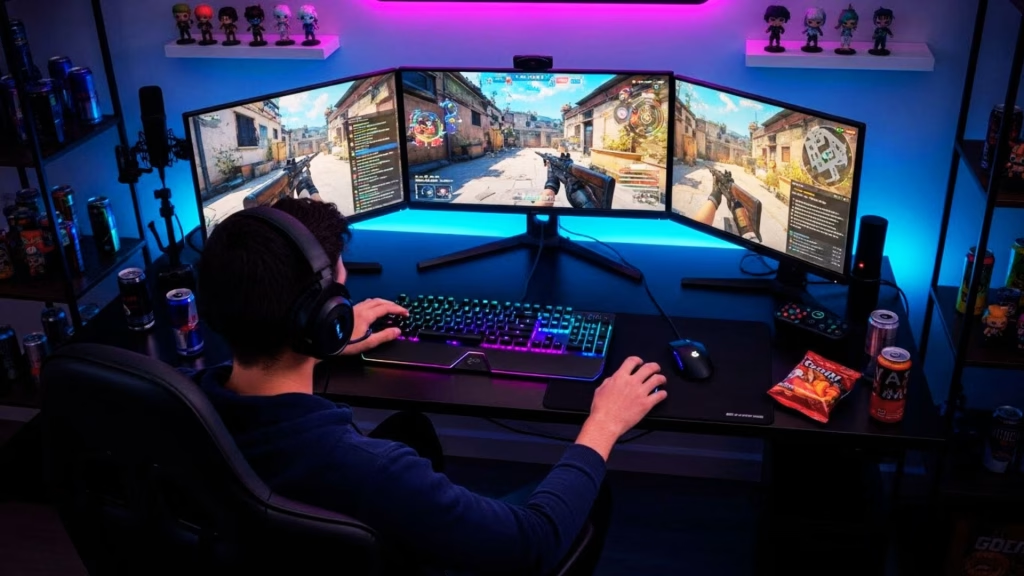
Cloud Gaming Becomes More Mainstream
Cloud gaming is transforming access to high-quality gaming experiences. Instead of relying on expensive hardware, players can stream games directly from cloud servers.
Key advantages include:
- Reduced need for powerful consoles or PCs
- Instant access to games
- Cross-device compatibility
As internet infrastructure improves, cloud gaming is becoming more reliable and accessible, opening gaming to broader audiences.
Growth of Mobile Gaming and Esports
Mobile gaming continues to dominate the global gaming market. By 2026, mobile esports has gained legitimacy alongside PC and console competitions.
Mobile gaming trends include:
- Competitive mobile esports tournaments
- Enhanced graphics and performance
- Greater developer investment
Mobile accessibility allows esports to reach regions where traditional gaming setups are less common.
Artificial Intelligence in Game Development
AI is playing a growing role in how games are designed and experienced.
AI-driven features include:
- Smarter non-player characters (NPCs)
- Dynamic difficulty adjustment
- Personalized gameplay experiences
- Advanced cheat detection
AI improves immersion and makes games more adaptive to individual player behavior.
Rise of Immersive Technologies
Virtual reality (VR) and augmented reality (AR) are becoming more refined and accessible.
In gaming and esports, immersive technologies enable:
- More realistic environments
- Physical interaction within games
- New competitive formats
As hardware becomes more affordable, immersive gaming experiences are expected to grow in popularity.
Esports as a Mainstream Entertainment Industry
Esports has evolved beyond niche communities into a mainstream entertainment sector.
Key developments include:
- Professional player contracts
- Franchise-based leagues
- Large-scale global tournaments
- Dedicated esports arenas
Esports is now comparable to traditional sports in terms of production quality and fan engagement.
Integration of Streaming and Gaming Communities
Streaming platforms play a central role in gaming culture. Gamers and fans interact in real time through live streams, chats, and creator-driven content.
Benefits of streaming integration:
- Stronger community engagement
- Direct fan interaction
- New revenue streams for players and creators
Digital media platforms like Redandwhitemagz analyze how gaming culture, streaming ecosystems, and esports trends intersect, offering insights into the future of interactive entertainment and digital communities.
Expansion of Cross-Platform Play
Cross-platform gaming allows players on different devices to compete and collaborate.
This trend:
- Expands player bases
- Enhances social interaction
- Increases game longevity
By 2026, cross-platform compatibility is becoming an industry standard rather than a feature.
You Can Also Read: rise-of-streaming-tv-change
Esports Education and Career Pathways
The esports ecosystem now includes education, training, and professional development opportunities.
Growth areas include:
- Esports programs in schools and universities
- Coaching and analytics roles
- Content creation and event management careers
Esports is increasingly viewed as a viable career path beyond professional play.
Gaming as a Social and Cultural Space
Gaming has become a social hub where people connect, collaborate, and express identity.
Modern games function as:
- Virtual social spaces
- Creative platforms
- Cultural meeting points
This shift highlights gaming’s role in shaping digital culture and community building.
Monetization and Business Model Innovation
Gaming revenue models continue to evolve.
Trends include:
- Free-to-play models with in-game purchases
- Subscription-based gaming services
- Brand sponsorships and collaborations
Balancing monetization with player satisfaction remains a key challenge.
Focus on Player Well-Being and Ethics
As gaming grows, so does awareness of mental health, fairness, and inclusivity.
Industry focus areas include:
- Responsible gaming practices
- Anti-toxicity measures
- Fair competition and regulation
Ethical gaming environments support sustainable growth and positive communities.
The Globalization of Gaming and Esports
Gaming and esports are increasingly global, connecting players and fans across borders.
Global trends include:
- International tournaments
- Cross-cultural collaborations
- Worldwide fan engagement
This global reach strengthens gaming’s influence as a unifying digital force.
The Future Outlook for Gaming and Esports
By 2026, gaming and esports will continue to blend entertainment, technology, and community. Innovation will focus on accessibility, immersion, and meaningful engagement.
Players, creators, and organizations that adapt to these trends will shape the next era of interactive entertainment.
Conclusion
The top trends in gaming and esports in 2026 reflect a dynamic and expanding industry. From cloud gaming and AI-driven experiences to immersive technologies and mainstream esports, the gaming world is evolving faster than ever.
As gaming becomes more accessible, social, and culturally significant, its impact extends beyond screens into global entertainment and digital lifestyles. Understanding these trends helps players, fans, and businesses prepare for the future of gaming—where innovation, competition, and community come together.