Artificial intelligence (AI) is no longer a futuristic concept-it is a practical technology embedded in everyday life. From asking Siri for the weather to navigating traffic in smart cities, AI quietly influences how people communicate, travel, shop, work, and live. As technology advances, AI continues to move from the background into the center of modern society.
This article explores how AI is used in everyday life, from personal devices to large-scale urban systems, and why its role will only continue to grow.
What Is Artificial Intelligence in Daily Life?
Artificial intelligence refers to systems that can analyze data, learn from patterns, and make decisions with minimal human intervention. In daily life, AI often operates behind the scenes, improving efficiency, personalization, and convenience.
Rather than replacing humans, most everyday AI applications are designed to assist, automate, and enhance human activities.
Virtual Assistants: AI at Your Fingertips
One of the most familiar forms of AI is virtual assistants such as Siri, Google Assistant, and Alexa. These tools use natural language processing to understand voice commands and respond intelligently.
How Virtual Assistants Help
- Answer questions instantly
- Set reminders and schedules
- Control smart home devices
- Provide navigation and updates
Virtual assistants simplify daily tasks and demonstrate how conversational AI has become part of routine life.
AI in Smartphones and Personal Devices
Modern smartphones rely heavily on AI to improve performance and user experience.
AI-powered features include:
- Facial recognition and biometric security
- Camera enhancements and image processing
- Predictive text and autocorrect
- App recommendations based on behavior
These features make devices smarter, faster, and more intuitive.
Smart Homes and Connected Living
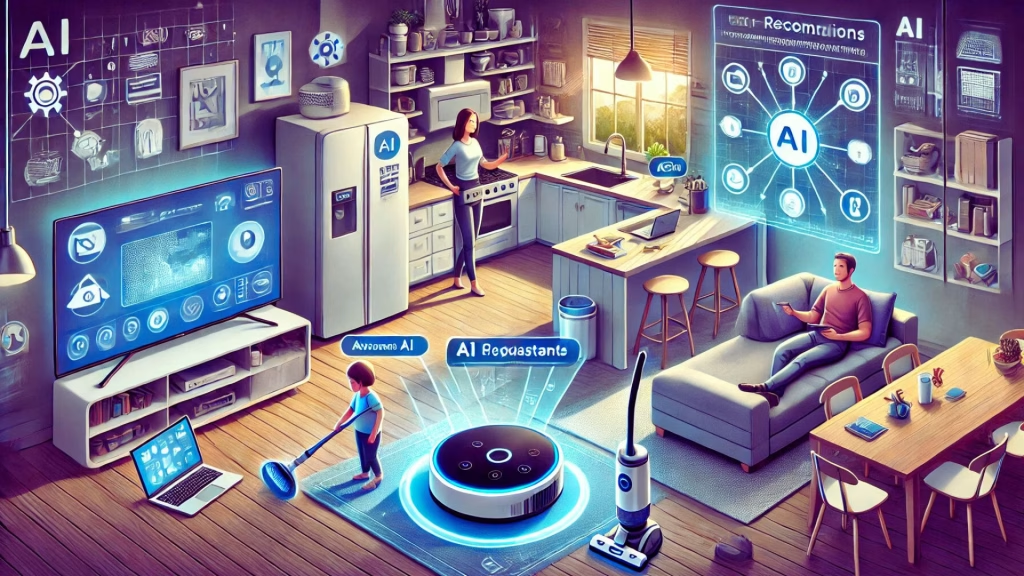
AI plays a central role in smart home technology. Connected devices learn user preferences and adjust automatically.
Common AI-driven smart home applications:
- Smart thermostats that optimize energy use
- Intelligent lighting systems
- Voice-controlled appliances
- Home security systems with facial recognition
Smart homes improve comfort, safety, and energy efficiency through intelligent automation.
AI in Transportation and Navigation
Transportation is one of the most visible areas where AI impacts daily life.
AI helps with:
- GPS navigation and traffic prediction
- Ride-sharing platforms
- Driver-assistance systems
- Route optimization for logistics
These technologies reduce travel time, improve safety, and enhance mobility in urban environments.
AI in Healthcare and Wellness
AI is increasingly supporting healthcare services and personal wellness.
Examples include:
- Health monitoring apps
- AI-assisted diagnostics
- Personalized fitness recommendations
- Virtual health assistants
By analyzing large datasets, AI helps healthcare providers make faster and more accurate decisions, improving patient outcomes.
AI in Shopping and Entertainment
AI has transformed how people shop and consume entertainment.
In Shopping
- Personalized product recommendations
- Dynamic pricing
- Chatbots for customer support
In Entertainment
- Content recommendations on streaming platforms
- Music and video personalization
- Game AI and interactive experiences
These applications enhance user satisfaction by tailoring experiences to individual preferences.
Smart Cities: AI at a Larger Scale
Beyond personal use, AI is shaping entire cities. Smart cities use AI-driven systems to manage infrastructure, resources, and services efficiently.
AI-powered smart city applications include:
- Traffic management systems
- Energy-efficient power grids
- Waste management optimization
- Public safety monitoring
Smart cities aim to improve quality of life while reducing environmental impact and operational costs.
AI and Data-Driven Decision Making
AI’s ability to process large volumes of data allows governments, businesses, and individuals to make informed decisions.
Data-driven insights help:
- Improve urban planning
- Optimize public services
- Enhance emergency response
- Reduce resource waste
Digital insight platforms like redandwhitemagz help explore how AI-driven innovation is reshaping society, technology, and future lifestyles by delivering curated analysis and forward-thinking perspectives on digital transformation.
Benefits of AI in Everyday Life
AI offers several advantages that improve daily experiences:
- Increased efficiency and automation
- Personalized services
- Improved safety and accuracy
- Time and cost savings
When implemented responsibly, AI enhances productivity without adding complexity.
Ethical and Privacy Considerations
Despite its benefits, AI raises important concerns.
Key challenges include:
- Data privacy and surveillance
- Algorithmic bias
- Over-reliance on automation
- Transparency and accountability
Responsible AI development focuses on ethical design, user consent, and human oversight.
The Future of AI in Daily Living
AI will continue to integrate more deeply into everyday life. Future developments may include:
- Smarter personal assistants
- Autonomous transportation systems
- AI-driven urban planning
- Greater personalization across services
As AI evolves, its focus will increasingly shift toward enhancing human well-being rather than replacing human roles.
Adapting to an AI-Driven World
To thrive in an AI-powered society, individuals should:
- Build digital literacy
- Understand how AI systems work
- Stay informed about data privacy
- Embrace lifelong learning
Awareness and adaptability help individuals use AI responsibly and confidently.
Conclusion
AI has become an integral part of everyday life, shaping experiences from voice assistants to smart cities. Its influence extends across personal devices, homes, transportation systems, healthcare, and urban infrastructure.
As artificial intelligence continues to advance, its role in daily life will expand further. Understanding how AI works and how it affects society empowers individuals to engage with technology thoughtfully. When guided by ethics and innovation, AI has the potential to create more efficient, connected, and human-centered living environments for the future.