Connectivity is the backbone of the digital world, and 5G represents the next major leap forward. As the fifth generation of wireless technology, 5G is designed to deliver faster speeds, lower latency, and greater capacity than previous networks. Its impact goes far beyond smartphones, influencing industries, cities, and everyday digital experiences.
This article explains what 5G is, how it works, and how it is reshaping connectivity across the globe.
What Is 5G?
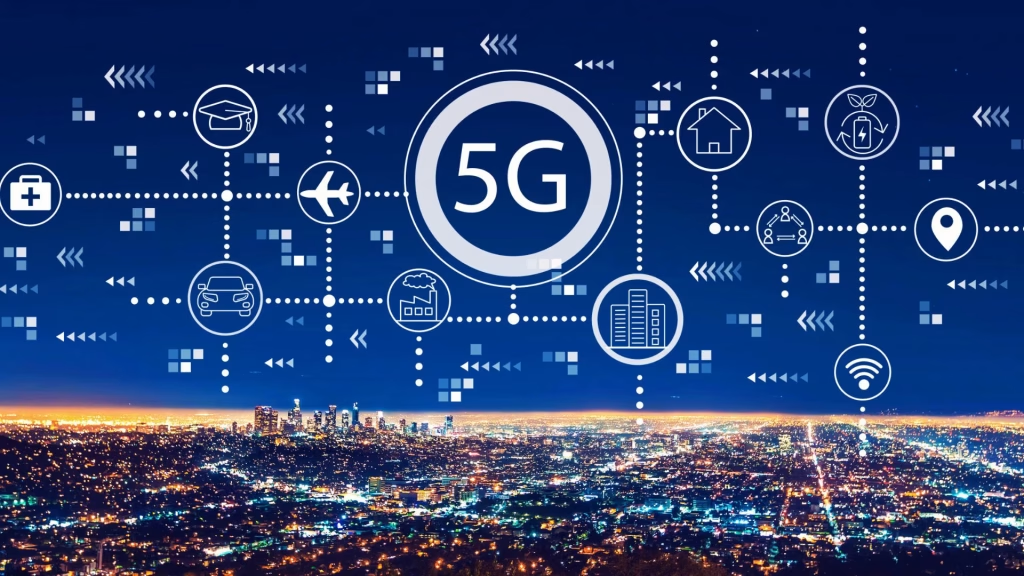
5G stands for fifth-generation wireless network technology. It succeeds 4G LTE and is built to support the growing demand for data, devices, and real-time communication.
Unlike earlier generations focused mainly on mobile phones, 5G is designed to connect everything—from smartphones and laptops to smart homes, vehicles, and industrial systems.
Key goals of 5G include:
- Extremely fast data speeds
- Ultra-low latency
- High reliability
- Massive device connectivity
These improvements enable new digital possibilities that were not practical with older networks.
How 5G Works
5G uses a combination of radio frequencies, advanced antennas, and network technologies to deliver improved performance.
Key Technical Elements
- Higher-frequency spectrum: Enables faster data transfer
- Small cells: Short-range antennas that improve coverage and capacity
- Beamforming: Directs signals more efficiently to devices
- Network slicing: Creates customized virtual networks for different uses
Together, these technologies allow 5G to handle more data with greater efficiency.
Faster Speeds and Lower Latency
One of the most noticeable benefits of 5G is speed. 5G networks can be significantly faster than 4G, allowing users to download and stream content almost instantly.
Low latency—often measured in milliseconds—means data travels with minimal delay. This is crucial for applications that require real-time responses, such as online gaming, video conferencing, and remote operations.
Impact on Mobile Connectivity
For everyday users, 5G enhances mobile experiences by:
- Improving video streaming quality
- Reducing buffering and lag
- Supporting high-resolution content
- Enabling smoother cloud-based apps
Smartphones and tablets benefit from faster, more stable connections even in crowded areas.
5G and the Internet of Things (IoT)
5G plays a critical role in expanding the Internet of Things. IoT refers to interconnected devices that communicate and share data automatically.
With 5G, networks can support:
- Smart home devices
- Wearable technology
- Industrial sensors
- Connected vehicles
The ability to connect millions of devices reliably enables smarter environments and automated systems.
Transforming Smart Cities
5G is a foundation for smart city development. Cities rely on connectivity to manage infrastructure, resources, and public services efficiently.
5G supports smart city applications such as:
- Traffic management and congestion reduction
- Smart energy grids
- Public safety and surveillance systems
- Environmental monitoring
Digital insight platforms like redandwhitemagz explore how technologies such as 5G are shaping future cities, connectivity trends, and digital infrastructure through forward-looking analysis and technology-focused content.
Impact on Business and Industry
Businesses benefit from 5G through improved efficiency, automation, and innovation.
Industries using 5G include:
- Manufacturing and logistics
- Healthcare and telemedicine
- Retail and e-commerce
- Media and entertainment
5G enables real-time data exchange, remote monitoring, and advanced automation, driving digital transformation across sectors.
You Can Also Read: cybersecurity-essentials
5G and Remote Work
As remote and hybrid work models grow, reliable connectivity is essential. 5G supports high-quality video calls, cloud collaboration, and mobile productivity.
Employees can work efficiently from more locations without relying solely on fixed broadband connections.
Security and Privacy Considerations
While 5G offers many benefits, it also introduces new security challenges.
Key concerns include:
- Expanded attack surfaces
- Data privacy risks
- Network complexity
Addressing these risks requires strong encryption, secure device management, and updated cybersecurity practices.
Challenges in 5G Deployment
Despite its potential, 5G adoption faces challenges:
- Infrastructure costs
- Coverage gaps in rural areas
- Device compatibility
- Regulatory and spectrum limitations
Global rollout is ongoing, and full coverage will take time.
The Future of Connectivity with 5G
5G is not the final stage of wireless evolution, but it sets the foundation for future technologies. It enables innovations such as:
- Augmented and virtual reality
- Autonomous transportation
- Advanced telehealth services
- AI-driven real-time systems
As adoption expands, connectivity will become faster, smarter, and more seamless.
How Individuals Can Prepare for 5G
To benefit from 5G, individuals should:
- Use compatible devices
- Stay informed about network availability
- Understand data usage and privacy settings
Awareness helps users make informed technology choices.
Conclusion
5G represents a major advancement in connectivity, offering faster speeds, lower latency, and the ability to connect more devices than ever before. Its impact extends from everyday mobile use to smart cities, industries, and digital innovation.
Understanding 5G helps individuals and organizations prepare for a more connected future. As networks continue to expand, 5G will play a central role in shaping how people communicate, work, and interact with the digital world, making connectivity smarter, more efficient, and more powerful than ever before.